
FOR IMMEDIATE RELEASE
June 25, 2026
CONTACT:
Aaron Bharucha, Public Relations Associate
(509) 429-1699 and epn-press@environmentalprotectionnetwork.org
Supreme Court Sides With Chemical Giant, Weakens Public’s Ability to Demand Warnings on Pesticide Harms
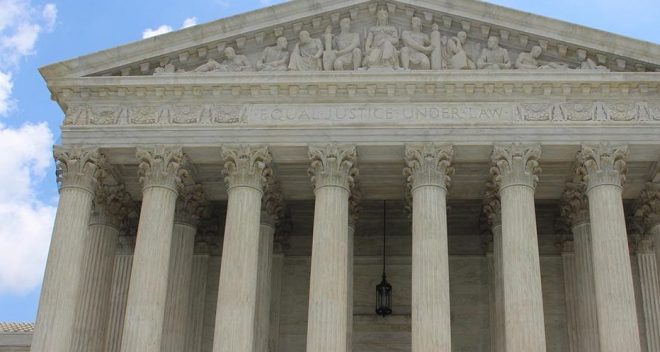
WASHINGTON, D.C. — Today, the U.S. Supreme Court issued a disappointing and potentially harmful ruling in favor of Bayer-Monsanto regarding the labeling of the weedkiller “Roundup” (glyphosate). The Court’s decision severely limits states’ ability to require warnings on a product’s labeling about a pesticide’s potential to cause cancer or pose other health risks, ruling that federal law under the Federal Insecticide, Fungicide, and Rodenticide Act (FIFRA) preempts such state-level protections.
Today’s decision comes after advocates have spent years calling for stronger protections against toxic chemicals and greater corporate accountability. In response to the ruling, the Environmental Protection Network (EPN) released the following statement:
“When people are exposed to pesticides, they deserve honest warnings about the risks,” said Bill Jordan, former Deputy Director of EPA’s Office of Pesticide Programs. “If federal protections aren’t enough, states should be able to act before people get sick. This Supreme Court decision favors companies and takes away one of the important ways states can require stronger health warnings for the public. The Court’s decision leaves families, workers, and communities with fewer tools to protect themselves and to recover damages when they are injured by a pesticide.”
A Broader Pattern of Eroding Environmental Protections
EPN filed an amicus brief in the case arguing EPA’s acceptance of pesticide labeling does not guarantee that all necessary health warnings are included, nor does it mean that additional methods of giving warnings – point of sale signage or television and radio ads, for example – are prohibited. The brief underscored that pesticide science evolves over time, and manufacturers have an ongoing legal responsibility to update labels as new risks emerge. EPN also contended that state-level failure-to-warn lawsuits are fully consistent with the Federal Insecticide, Fungicide, and Rodenticide Act (FIFRA) — the primary federal law that regulates the registration, labeling, sale, distribution, and use of pesticides in the United States. Rather than conflicting with federal law, these state-level actions reinforce FIFRA’s core requirement for accurate, adequate, and truthful labeling.
Today’s decision comes amid a broader pattern of weakened safeguards at the EPA, including delayed enforcement, expanded exemptions for polluters, the appointment of former chemical industry officials to key decision-making roles, and attacks on states’ and citizens’ rights to fight back against pollution.
Just last week, in a move that threatens to dismantle decades of community environmental protections, the Department of Justice (DOJ) filed a motion to intervene and dismiss a Clean Air Act citizen lawsuit brought by the NAACP against xAI’s use of gas turbines located in Southaven, Mississippi, to power a data center near Memphis. EPN is warning that this filing goes far beyond a single data center. Instead, the DOJ is asking a federal court to grant the Executive Branch a sweeping “veto power” to shut down congressionally authorized citizen lawsuits whenever community enforcement conflicts with the administration’s political priorities.
Together, these trends underscore what’s at stake: whether federal, state, and community-level protections will work in tandem to prevent harm or leave communities to bear the consequences after the fact.
###
ABOUT THE ENVIRONMENTAL PROTECTION NETWORK
The Environmental Protection Network is a nonpartisan organization comprising more than 800 former EPA scientists, toxicologists, chemists, biologists, engineers, and policy analysts — many of whom spent decades as career experts inside the agency. They assessed cancer and developmental risks, studied links between pollution and fertility and chronic disease, investigated contaminated communities, and brought enforcement actions to hold corporate polluters accountable. EPN was founded in 2017 to serve as an independent voice promoting science-based policies that protect Americans’ health.