 Dr. Richard Baldauf
Environmental Science Impact Fellow
Dr. Richard Baldauf
Environmental Science Impact Fellow
Dr. Richard Baldauf
Environmental Science Impact Fellow
Bio
Dr. Richard Baldauf is an environmental engineer and research-policy leader with 25 years of experience at the U.S. Environmental Protection Agency (EPA). Throughout his career, he advanced the science and practice of air quality management, sustainable urban development, climate mitigation, and public health protection through interdisciplinary research and policy initiatives. Dr. Baldauf led research programs examining air and climate pollutant emissions, human exposure, and environmental and human health impacts, with a focus on transportation sources in urban environments. His work has helped shape understanding of how urban design, green infrastructure, and roadside vegetation can be used to improve air quality and reduce community exposure to pollution. He has also contributed to emerging research on motor vehicle non-exhaust emissions, including tire and brake wear particles, and their growing importance in environmental management and public health protection. Widely recognized for bridging science and policy, Dr. Baldauf has authored more than 100 peer-reviewed publications, reports, and book chapters and has worked extensively with communities, government agencies, and international organizations to translate research into practical solutions that promote healthier, more resilient, and sustainable communities.
Project Summary
This project expands previous EPA research to advance urban green infrastructure (GI) as a strategy for reducing transportation-related pollution and improving community health. The primary objective is to develop practitioner-ready modeling tools and technical guidance that enable urban planners, landscape architects, engineers, community leaders, and policymakers worldwide to design, evaluate, and optimize GI projects for air quality improvement. Central to the effort is developing a user-friendly GI air quality model and accompanying guidance that translate research findings into actionable decision-support resources.
The project anticipates expanding beyond air pollution mitigation by recognizing the broad ecosystem services that well-designed green infrastructure can provide, including stormwater management, urban cooling, climate resilience, carbon sequestration, and improvements to community well-being. By integrating air quality tools with existing GI benefit estimators, the project seeks to help practitioners identify designs that maximize cumulative environmental, health, and economic benefits.
A key focus is the role of GI in addressing emerging concerns related to motor vehicle non-exhaust tire and brake wear emissions that can include microplastics, toxic metals, and 6PPD-quinone. As these pollutants become an increasingly important environmental challenge, the project will demonstrate how nature-based solutions can help reduce exposures and provide communities with practical, near-term mitigation options.
 Dr. Kyle Buck
Environmental Science Impact Fellow
Dr. Kyle Buck
Environmental Science Impact Fellow
Dr. Kyle Buck
Environmental Science Impact Fellow
Bio
Kyle D. Buck, PhD, is an environmental scientist and geospatial researcher with extensive experience in community resilience, hazard assessment, and spatial modeling. He currently serves as a Lecturer at the University of Vermont’s Rubenstein School of Environment and Natural Resources, where he teaches courses in environmental assessment, resilience planning, and applied GIS. Prior to his academic appointment, Dr. Buck worked for over a decade as a research scientist with the U.S. Environmental Protection Agency and the National Oceanic and Atmospheric Administration, contributing to national- and regional-scale research on climate hazards, environmental justice, and community resilience.
Project Summary
Dr. Kyle Buck’s research addresses a critical gap in how communities prepare for and recover from environmental hazards. His framework, CHAPPIE (Community Hazardscape and Amenity Placement in Provisioning of Improved Endpoints), is a spatially explicit model that measures community resilience by analyzing the relationship between hazard exposure and access to essential services and amenities, such as healthcare, schools, and emergency infrastructure. Rather than static resilience, CHAPPIE identifies where communities have the resources in place to withstand and recover from environmental stressors, and where critical gaps remain. Published in two peer-reviewed articles, CHAPPIE has been designed from the outset as a practical planning tool. Through the EPN Environmental Science Impact Fellowship, Dr. Buck aims to validate and operationalize this framework through case studies in rural Vermont, building toward a data pipeline that will make CHAPPIE accessible to regional, state, and local planners working to strengthen community resilience.
 Dr. Joseph Bundy
Environmental Science Impact Fellow
Dr. Joseph Bundy
Environmental Science Impact Fellow
Dr. Joseph Bundy
Environmental Science Impact Fellow
Bio
Dr. Joseph Bundy (Joe) holds a Ph.D. in Biomedical Sciences from Florida State University and has a background in bioinformatics and computational toxicology. Joe has extensive experience analyzing ‘omics’ data from a variety of model systems including mouse, zebrafish, and human cancer cell lines. He received extensive training as a post-doc in the Center for Computational Toxicology and Exposure at the U.S. EPA where he developed bioinformatic approaches for interpreting High Throughput Transcriptomics datasets. Joe is continuing to develop computational methods to support interpretation of data generated by New Approach Methodologies at Vindhya Data Science.
Project Summary
Dr. Bundy’s fellowship project focuses on enhancing the adoption of New Approach Methodologies (NAMs) for measuring chemical bioactivity. The proposed project will develop computational tools and datasets to support the use of high throughput transcriptomics (HTTr) to evaluate environmental chemicals of concern. The project has two components: the first is to develop computational methods for estimating chemical potency from publicly available HTTr chemical screening data generated by EPA and other stakeholders. These methods will be bundled into a publicly available R package and will integrate signature scoring with concentration response analysis to estimate transcriptomic points of departure from large datasets. The second component of the proposed project is a peer reviewed manuscript describing a HTTr screen of reference chemicals conducted in a human cell line model system. This screen contains well-studied chemicals that perturb specific molecular targets and is essential for developing bioinformatic methods for elucidating mechanism(s) of action of understudied chemicals. These two projects aim to reduce reliance on repeat dose chronic animal studies by facilitating adoption of high throughput transcriptomics for chemical bioactivity evaluation.
 Benjamin DeAngelo
Environmental Science Impact Fellow
Benjamin DeAngelo
Environmental Science Impact Fellow
Benjamin DeAngelo
Environmental Science Impact Fellow
Bio
Benjamin DeAngelo is an experienced leader bridging climate science with emissions mitigation and adaptation actions domestically and internationally. He departed the federal government in 2025 after serving for over 27 years, including as EPA’s inaugural Director of the Office of Climate Adaptation and Sustainability. He also served as the deputy director for NOAA’s Climate Program Office and as senior climate advisor for the White House Office of Science and Technology Policy in the Obama Administration. He has since founded Operation Future, LLC, focused on climate adaptation and resilience, and is an Adjunct Professor at Howard University in Washington, DC. DeAngelo previously served a two-year term as chair of the Arctic Monitoring and Assessment Program, a working group under the Arctic Council. He’s recently written about promising options to use quantitative metrics of climate resilience by governments and project developers, and a critique of the current EPA’s repeal of the greenhouse gas endangerment finding. DeAngelo received his bachelor’s in geography at Pennsylvania State University, master’s in geography at the University of Toronto, and was a Fulbright Scholar in Germany. In 2022, he was named by Penn State’s College of Earth and Mineral Sciences as one of its 125th Anniversary Fellows.
Project Summary
My proposal is to conduct research and interviews to produce a report to clarify and recommend a set of actions for EPA’s mission and mandate for climate adaptation. I propose to focus this work on EPA’s core mission areas of air quality, water quality, contaminant cleanup, and chemical regulation. Extreme heat will be an additional focal area given the importance of that climate risk factor. The first element will be to summarize the state of science on the extent to which our rapidly changing climate is impacting U.S. air quality, water quality, contaminant cleanup, and chemical behavior. The second element is to assess the opportunities and limitations for EPA to take climate adaptive measures in light of existing statutory authorities. The third element is to identify the most important things that EPA should do to protect public health and the environment from the risks of climate change. This will entail relationships with States, grant programs, rulemakings, tool development, and research. The fourth element will be a set of technical, policy, funding, personnel and legislative recommendations for EPA, States, and Congress to empower EPA to have a clear and targeted role for climate adaptation.
 Pamela Franklin
Environmental Science Impact Fellow
Pamela Franklin
Environmental Science Impact Fellow
Pamela Franklin
Environmental Science Impact Fellow
Bio
Pamela M. Franklin, Ph.D. is an environmental engineer and methane policy expert who spent 22 years at the U.S. Environmental Protection Agency’s Office of Air and Radiation working on climate change, serving most recently as Chief of the Methane Partnerships Branch. In that role, she designed and led a portfolio spanning five domestic voluntary methane programs covering the oil and gas, coal mining, agriculture, and waste sectors. She also directed the Global Methane Initiative, a 49-country public-private partnership that achieved more than 50 million metric tons of CO₂-equivalent in annual reductions at its peak. She served as Lead Author for the 2006 IPCC Guidelines for National Greenhouse Gas Inventories, contributing to the scientific work recognized by the 2007 Nobel Peace Prize. She holds a Ph.D. in Energy and Resources from UC Berkeley, where her dissertation research included combustion analysis of gasoline additives, an M.S. in Civil and Environmental Engineering from Stanford, and a B.S.E. in Chemical Engineering from Princeton. She currently serves as a judge for the Climate Curve Prize: Methane.
Project Summary
For more than three decades, EPA’s methane outreach programs provided the technical backbone of U.S. voluntary action on methane emissions across the oil & gas, coal mining, waste, and agriculture sectors, including sector-specific guidance, measurement and verification frameworks, emissions accounting tools, and platforms for public-private collaboration that engaged more than 100 corporate partners and supported action in 49 countries. Federal leadership and funding for these programs has effectively ceased. Dr. Franklin’s fellowship project addresses the gaps left by this disruption. Drawing on her engineering background and more than a decade leading these programs at EPA, she is conducting a rigorous, technically grounded assessment of which program functions, technical resources, and institutional services have been lost; which of those gaps are most consequential for near-term methane mitigation; and where states, NGOs, and private-sector actors can fill them. The project spans both domestic programs and U.S. international initiatives, including the Global Methane Initiative. The core deliverable is a policy roadmap providing practical, evidence-based guidance for the states, companies, funders, and organizations now working to maintain voluntary methane action in the absence of federal leadership. Dr. Franklin plans to collaborate with the Center for Global Sustainability at the University of Maryland.
 Dr. Beth Haley
Environmental Science Impact Fellow
Dr. Beth Haley
Environmental Science Impact Fellow
Dr. Beth Haley
Environmental Science Impact Fellow
Bio
Dr. Beth Haley (she/her) is an environmental health scientist who studies the intersection of water, climate change, and health. Recent research projects include epidemiologic studies of health outcomes associated with combined sewer overflows, spatial and risk modeling of fecal indicators in riverine systems, and wildfire impacts on drinking water quality in the western US. Beth holds a BA degree in Conservation Biology from Boston University, an MA in Environmental Studies from Prescott College, and a PhD in Environmental Health from the Boston University School of Public Health. She lives in Oregon and loves spending time outside with her partner and dog.
Project Summary
Combined sewer systems (CSS) are located in more than 650 municipalities across the United States. CSS collect wastewater and stormwater into a single pipe. When the volume of combined stormwater and wastewater exceeds the capacity of the system during heavy rainfall, CSS overflow into receiving waterbodies in releases called combined sewer overflows (CSOs). CSO discharge contains microbial pathogens and chemical and physical contaminants that pose a threat to human health and the environment. The greatest acute public health risk from CSO discharge arises from waterborne pathogens which people can be exposed to through water-based recreation or contaminated drinking water. Climate change is expected to exacerbate CSO events in regions projected to receive more frequent extreme precipitation. Despite the clear public health risk, few studies have estimated the association between CSO activations and adverse health outcomes. The limited evidence directly linking CSO events to health outcomes makes justification of the level of investment needed to eliminate overflows challenging. During this fellowship, I will work with collaborators to address this research gap by publishing several studies on the health and water quality impacts of CSOs and writing a white paper summarizing this body of work to inform future research and actions.
 Amalia Handler
Environmental Science Impact Fellow
Amalia Handler
Environmental Science Impact Fellow
Amalia Handler
Environmental Science Impact Fellow
Bio
Amalia Handler is a freshwater scientist whose research focuses on understanding and predicting water quality in rivers, streams, and lakes. Her current research focuses on harmful algal blooms in lakes across the United States. She develops national-scale spatial models that integrate watershed data, field surveys, and satellite remote sensing to identify which lakes are at elevated risk for toxic cyanobacteria blooms. She earned her Ph.D. from Arizona State University under the mentorship of Dr. Nancy Grimm, where she studied nitrogen cycling in dryland and urban aquatic systems. She went on to build a national HABs research program in EPA’s Office of Research and Development, drawing from multiple national datasets to answer questions about which lakes are more at-risk for blooms. She currently works as a Limnologist at FB Environmental. She lives in the Seacoast Region of New Hampshire, surrounded by the lakes and watersheds that motivate her work.
Project Summary
Harmful algal blooms caused by cyanobacteria are a growing threat to lakes across the United States, with serious implications for drinking water safety, recreational water use, and public health. Yet water managers lack the tools to know which of the hundreds of thousands of lakes in the country are most at risk for blooms and particularly toxic blooms. Through her EPN fellowship, Amalia is completing a national-scale analysis that uses spatial statistical models to predict cyanobacteria abundance and microcystin risk for approximately 125,000 lakes across the contiguous US. This work will be released as a publication and an open-source R package to ensure it is immediately usable by the scientific community and water resource managers. In the second phase of her fellowship, she will extend this framework into environmental justice, asking at national scale whether harmful algal bloom exposure risk falls disproportionately on communities least equipped to respond. Amalia is thrilled to be developing this work with support from EPN
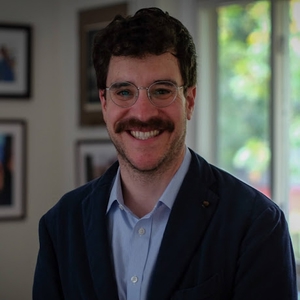 Dr. Samuel Kay
Environmental Science Impact Fellow
Dr. Samuel Kay
Environmental Science Impact Fellow
Dr. Samuel Kay
Environmental Science Impact Fellow
Bio
Dr. Samuel Kay is an expert and leader in environmental health, cumulative impacts, climate, and air quality with over a decade and a half of experience. In faculty roles at the University of Washington and the University of Minnesota, Sam led multidisciplinary teams designing policy interventions to address environmental, climate, and health impacts. In the US Environmental Protection Agency’s offices of Research and Development (ORD) and Environmental Justice and External Civil Rights (OEJECR), he worked to advance environmental and health protection through science, policy, and regulatory initiatives, including the Sixth National Climate Assessment (NCA6), inaugural White House Environmental Justice Science, Data, and Research plan, and numerous regulatory actions including NAAQS and major air toxics rules. Sam co-founded the Environmental & Health Data Analysis Trust (EHDAT) in 2025 and currently serves as Chief of Air Quality Planning for the District of Columbia and as a faculty affiliate in the Johns Hopkins University Department of Environmental Health & Engineering.
Project Summary
The Environmental & Health Data Analysis Trust (EHDAT), founded in 2025, is developing a next-generation environmental and health screening platform to support state, Tribal, and local governments, researchers, community organizations, and the public with reliable, transparent, and scientifically rigorous environmental, health, and cumulative impacts analysis. Led by former staff from EPA’s Office of Environmental Justice and External Civil Rights (OEJECR), EHDAT builds on the strengths and lessons learned from EJScreen and other screening tools while addressing their limitations through improved data, analytical methods, and usability. The modular platform will integrate nationally consistent and locally generated data into a suite of user-friendly mapping and analytical tools that can evolve as new science, datasets, and user needs emerge. By providing a stable, nonpartisan resource grounded in the best available science, EHDAT will help advance environmental and public health decision-making while remaining resilient to changing political conditions. EHDAT is collaborating closely with the Johns Hopkins University Department of Environmental Health & Engineering, where we are affiliated research scientists.
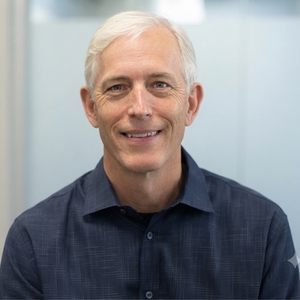 Dr. Charles Lane
Environmental Science Impact Fellow
Dr. Charles Lane
Environmental Science Impact Fellow
Dr. Charles Lane
Environmental Science Impact Fellow
Bio
Dr. Charles Lane is an independent senior scientist and research ecologist. His work focuses on quantifying the watershed-scale biogeochemical and hydrological functions of wetlands and streams using spatial, statistical, and process-based models. He held multiple scientific leadership positions during a 23-yr career with the US EPA, Office of Research and Development, including Science Lead for the Watershed Integrity Research Project (>100 active personnel) and the Wetland Ecosystem Services Research Program. While at EPA, Dr. Lane organized and chaired international conferences including the 6th Interagency Conference on Research in the Watersheds and the Third International Symposium on Ecology and Biodiversity in Rivers of Northeast Asia and North America. He led the competitively funded 20-person thinktank-workgroup assessing wetland connectivity to downstream waters and co-led the headwater streamflow modeling of downstream effects workgroup. Dr. Lane also conducted collaborative, field-based research across North America and internationally with colleagues from both the Russian Academy of Science and the Chinese Ministry of Forestry. He has >100 peer-reviewed publications with >7000 citations and has received numerous awards for scientific achievement. Dr. Lane received his Ph.D. and M.S. in Systems Ecology from the University of Florida and his B.A. in Economics from the University of North Carolina at Chapel Hill. He serves on the Galápagos Conservancy Board of Directors and is an editor at Wetland Ecology and Management. He and his family live in southeastern Wisconsin.
Project Summary
Dr. Lane’s Environmental Science Impact Fellowship will advance innovative research on wetlands and headwater stream functions at local-to-watershed scales. He will engage with collaborators and stakeholders across North America to determine how to best manage vulnerable waters (non-floodplain wetlands, inland freshwater wetlands not adjacent to river networks, and headwater streams) for downstream water quantity, water quality, and other critical ecosystem services in working landscapes. The work, supported by EPN, will include collaborative state-by-state regulatory gap analysis (following the US Supreme Court Sackett decision), predictive macroecological modeling of resource extents circa 2050/2100, quantification of biogeochemical and hydrological functioning in vulnerable waters over time, and structural analyses including wetland historical extents and headwater typology/flow dynamic relationships across the conterminous United States (CONUS). Dr. Lane will also conduct strategic watershed vulnerability and functional forecasting for headwater stream and aquatic system resiliency under climate-change scenarios across CONUS. The work will: use publicly available data, be rigorously conducted, be collaboratively reviewed and vetted by existing academic and federal scientific teams, be shared with local-regional-national stakeholders, and be peer-reviewed and communicated in high-impact scientific journals.
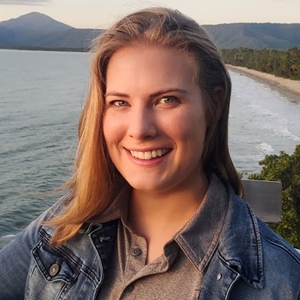 Courtney E. Larson
Environmental Science Impact Fellow
Courtney E. Larson
Environmental Science Impact Fellow
Courtney E. Larson
Environmental Science Impact Fellow
Bio
Courtney E. Larson is an aquatic ecologist leading the Biomonitoring and Aquatic Studies Section in the Vermont Department of Environmental Conservation. She oversees the state’s monitoring of macroinvertebrates, fish, and habitat across Vermont’s rivers and streams. Before joining Vermont DEC, she worked at EPA’s Office of Research and Development in the Great Lakes Toxicology and Ecology Division, where she managed an environmental DNA (eDNA) laboratory and researched eDNA methods for detecting invasive species and assessing aquatic ecosystem health. Her research has included studying fish eDNA biodiversity dynamics, as well as invasive mussel, zooplankton, and protist detection. Over the course of her career, she has sampled across a wide range of habitats and geographic settings, from Great Lakes coastal waters to Puerto Rican reservoirs, giving her a broad perspective on adapting monitoring methods to different environments. Courtney holds a Ph.D. in Entomology from Michigan State University and a B.A. in Biology from Wartburg College.
Project Summary
Courtney is piloting environmental DNA (eDNA) biomonitoring in Vermont streams that are already part of the state’s Clean Water Act ambient biomonitoring network. She is comparing molecular results against Vermont’s extensive (>40 years) baseline data on macroinvertebrates, fish, and habitat. The project will help determine whether molecular methods can expand monitoring coverage and provide better indicators of environmental change. Beyond the laboratory work, Courtney will organize workshops bringing together social scientists, water managers, and practitioners to identify barriers to eDNA adoption and build state agency staff confidence in interpreting molecular results. The goal is to produce a framework that other states can use to incorporate eDNA into their own water quality monitoring programs, helping ensure that research investment in this technology translates into on the ground use. This project bridges Courtney’s prior research with EPA ORD on eDNA methods development to her new role within state level Clean Water Act biomonitoring implementation.
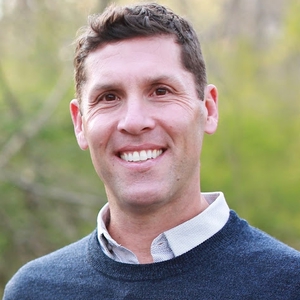 Tom Luben
Environmental Science Impact Fellow
Tom Luben
Environmental Science Impact Fellow
Tom Luben
Environmental Science Impact Fellow
Bio
Tom Luben, PhD, MSPH is a Senior Research Scientist at the University of Michigan School of Public Health and an Adjunct Professor in the Department of Epidemiology at the Gillings School of Global Public Health at UNC-Chapel Hill. He previously served as Senior Epidemiologist at the U.S. Environmental Protection Agency from May 2007 to October 2025. Dr. Luben conducts and publishes policy-relevant epidemiologic studies, focusing on the health effects of exposure to air and water pollution, including particulate matter and ozone. Recently, he has worked to gain an understanding of the association between exposure to environmental (including the built environment) and climatic conditions (both individually and as cumulative impacts) and health outcomes across the life course, including various adverse birth outcomes (such as birth defects and preterm birth) and fetal and infant mortality and measure of cognitive aging, and Alzheimer’s disease and related dementias. He holds an MSPH degree from Tulane University’s School of Public Health and Tropical Medicine, and a PhD in Environmental Health from Colorado State University.
Project Summary
Dr. Luben’s fellowship project will examine how historical redlining continues to shape present-day exposure to extreme temperatures and related health risks. The project will link Home Owners’ Loan Corporation (HOLC) redlining maps for more than 200 U.S. cities with daily extreme heat and cold metrics from 2000–2025 to assess whether neighborhoods historically graded as “hazardous” or “declining” experience systematically worse temperature extremes than higher-graded areas. The project will generate a publicly available time-series dataset of HOLC polygon-specific extreme temperature metrics that can be linked with spatially resolved health data. It will also demonstrate how spatial misalignment between historical HOLC boundaries and modern geographic units, such as census tracts or ZIP codes, can contribute to exposure misclassification and bias in epidemiologic studies when precise residential addresses are unavailable. Finally, the project will extend the analysis to health outcomes by linking HOLC redlining maps and extreme temperature data with Health and Retirement Study residential histories and cognitive measures. This work will evaluate whether residence in historically redlined neighborhoods is associated with poorer cognitive aging outcomes, including Alzheimer’s disease and related dementias, and whether extreme temperature exposures contribute to differential vulnerability.
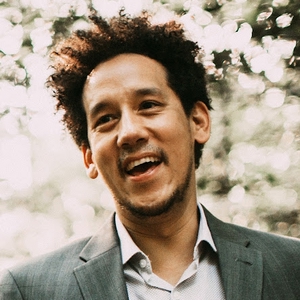 Tai Lung
Environmental Science Impact Fellow
Tai Lung
Environmental Science Impact Fellow
Tai Lung
Environmental Science Impact Fellow
Bio
Tai Lung is an environmental policy, geospatial data, and environmental justice leader with more than 20 years of experience advancing data-driven solutions to complex environmental challenges. After serving as an Environmental Education volunteer in the Peace Corps, he joined the U.S. Environmental Protection Agency, where he led EJScreen, EPA’s flagship environmental justice mapping tool, until the Office of Environmental Justice and External Civil Rights closed in 2025. He currently serves as Senior Advisor for Federal Data Policy at the Federation of American Scientists and as a Research Scientist at Johns Hopkins University, where he co-leads the Environmental and Health Data Analysis Trust (EHDAT), a nonprofit initiative developing an open, science-based environmental data platform. His work focuses on strengthening public access to environmental data, advancing cumulative impacts science, and building transparent, community-centered data infrastructure that supports research, policymaking, and environmental justice.
Project Summary
The Environmental & Health Data Analysis Trust (EHDAT), founded in 2025, is developing a next-generation environmental and health screening platform to support state, Tribal, and local governments, researchers, community organizations, and the public with reliable, transparent, and scientifically rigorous environmental, health, and cumulative impacts analysis. Led by former staff from EPA’s Office of Environmental Justice and External Civil Rights, EHDAT builds on the strengths and lessons learned from EJScreen and other screening tools while addressing their limitations through improved data, analytical methods, and usability. The modular platform will integrate nationally consistent and locally generated data into a suite of user-friendly mapping and analytical tools that can evolve as new science, datasets, and user needs emerge. By providing a stable, nonpartisan resource grounded in the best available science, EHDAT will help advance environmental and public health decision-making while remaining resilient to changing political conditions. EHDAT is being developed in partnership with the Johns Hopkins University Department of Environmental Health & Engineering, where members of the team are affiliated research scientists.
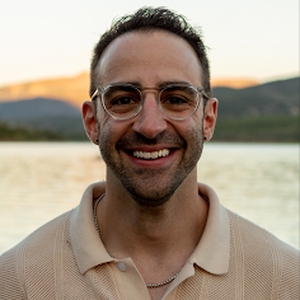 Stuart Nissenbaum
Environmental Science Impact Fellow
Stuart Nissenbaum
Environmental Science Impact Fellow
Stuart Nissenbaum
Environmental Science Impact Fellow
Bio
Stuart Nissenbaum is a climate and environmental policy professional based in Denver, Colorado. He is the solo founder of Canopy Risk Analytics, an AI-powered SaaS platform that quantifies reversal risk in forest carbon credits for insurers and reinsurers. He served at the Environmental Protection Agency (EPA) from 2021 through 2025 in the Science Policy Division, where his work covered Power Plant Rules, oil and gas methane standards, the American Innovation and Manufacturing (AIM) Act HFC phasedown, vehicle emissions standards, Subpart W greenhouse gas reporting, National Ambient Air Quality Standards (NAAQS) reconsiderations, and transportation conformity. From October 2021 to August 2023 he was EPA’s Head of Delegation to the Arctic Contaminants Action Program, a working group of the Arctic Council. He teaches climate adaptation policy at the University of Denver and Northern Illinois University, serves on the board of Groundwork Denver, and is a member of the Protect Our Winters Science Alliance with policy development responsibilities. His earlier career spans federal regulatory development and municipal environmental management, with environmental justice as a consistent lens across the work. He holds an MS in Environmental Science and an MPA, both from Indiana University.
Project Summary
Canopy Risk Analytics is an underwriting intelligence platform for carbon credit reversal risk. Carbon credits can fail after they are issued. Fire, drought, pest outbreak, storage failure, and governance breakdown all undo sequestration that a buyer has already paid for, and insurers pricing that exposure need numbers they can underwrite against rather than letter grades. Canopy models reversal risk using the same methods applied to catastrophe risk elsewhere in insurance. The platform produces exceedance probability curves, portfolio PML curves, treaty worksheets, buffer pool stress tests, and premium build-ups, each traceable back to the underlying peril assumptions. Every rating carries a confidence interval and a breakdown of which perils drive the result, so an underwriter can interrogate the output instead of accepting a score. The framework covers credits across the voluntary carbon market, including forest carbon and improved forest management, geological sequestration, direct air capture, BECCS, enhanced rock weathering, biochar, blue carbon, soil carbon, cookstoves, and sustainable aviation fuel. Projects are evaluated on multi-peril physical risk, climate-adjusted return intervals drawn from CMIP6 projections, leakage, and a governance score built across fifteen dimensions. The methodology is documented in a technical specification with 87 academic citations. Canopy is built for reinsurers, specialty MGAs, parametric carriers, ILS fund managers, and compliance market participants who need to price or transfer carbon permanence risk.
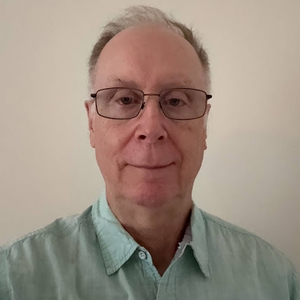 Dr. Jonathan Pleim
Environmental Science Impact Fellow
Dr. Jonathan Pleim
Environmental Science Impact Fellow
Dr. Jonathan Pleim
Environmental Science Impact Fellow
Bio
Dr. Jonathan Pleim is a physical scientist with over 40 years of experience in air quality and meteorological model development, including 35 years at EPA’s Office of Research and Development. He is a lead developer of several components of the Weather and Research and Forecast (WRF) model, including the Pleim-Xiu Land Surface Model and the Asymmetric Convective Model version 2 planetary boundary layer scheme, both of which have been widely adopted by the air quality modeling community. He also developed key components of EPA’s Community Multiscale Air Quality (CMAQ) model, such as the M3Dry dry deposition model, the bi-directional ammonia flux model, and an updated aerosol dry-deposition scheme. In his final years at EPA, he began developing the Urban Asymmetric Convective Model (UACM), a new high-resolution urban air quality modeling system that explicitly represents three-dimensional building morphology across both the meteorological and chemical components of WRF-CMAQ. Since leaving EPA, he has continued this work independently, evaluating UACM for New York City at sub-kilometer resolution and building international collaborations with institutions in France and universities in Taiwan. The UACM has direct applications to air quality regulation, environmental justice, and urban heat-stress assessment in the communities most affected by these challenges.
Project Summary
This project proposes to continue the development, evaluation, and application of the Urban Asymmetric Convective Model (UACM), a high-resolution urban meteorology and air quality modeling system that extends EPA’s WRF-CMAQ by explicitly representing 3D building morphology consistently across both meteorological and chemical components. The UACM represents urban environments as a matrix of street canyons where shading and multiple reflections of short wave and long wave radiation are calculated along with the blocking and shear effects of building walls on wind and turbulence. The result is a better representation of the urban heat island and more realistic representation of the urban boundary layer. Evaluation of WRF-CMAQ runs using the UACM for New York City at 0.444-km grid resolution shows substantially better nighttime temperatures (improved urban heat-island representation) and elimination of large nighttime/early-morning PM2.5 overpredictions. The work includes refining algorithms for broader adaptability across various cities, publishing the NYC evaluation journal article, and pursuing collaborations to apply the model to cities in the US and abroad. The code will be released via public GitHub, with results presented at AGU 2026. The project aims to give agencies and communities urgently needed tools for air quality regulation, environmental justice, and urban heat-stress.