
Dr. Kyle Buck
Environmental Science Impact Fellow
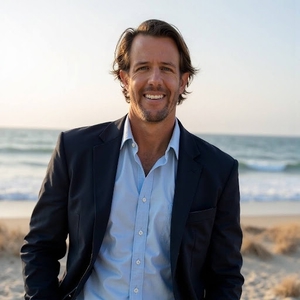
Bio
Kyle D. Buck, PhD, is an environmental scientist and geospatial researcher with extensive experience in community resilience, hazard assessment, and spatial modeling. He currently serves as a Lecturer at the University of Vermont’s Rubenstein School of Environment and Natural Resources, where he teaches courses in environmental assessment, resilience planning, and applied GIS. Prior to his academic appointment, Dr. Buck worked for over a decade as a research scientist with the U.S. Environmental Protection Agency and the National Oceanic and Atmospheric Administration, contributing to national- and regional-scale research on climate hazards, environmental justice, and community resilience.
Project Summary
Dr. Kyle Buck’s research addresses a critical gap in how communities prepare for and recover from environmental hazards. His framework, CHAPPIE (Community Hazardscape and Amenity Placement in Provisioning of Improved Endpoints), is a spatially explicit model that measures community resilience by analyzing the relationship between hazard exposure and access to essential services and amenities, such as healthcare, schools, and emergency infrastructure. Rather than static resilience, CHAPPIE identifies where communities have the resources in place to withstand and recover from environmental stressors, and where critical gaps remain. Published in two peer-reviewed articles, CHAPPIE has been designed from the outset as a practical planning tool. Through the EPN Environmental Science Impact Fellowship, Dr. Buck aims to validate and operationalize this framework through case studies in rural Vermont, building toward a data pipeline that will make CHAPPIE accessible to regional, state, and local planners working to strengthen community resilience.