
Pamela Franklin
Environmental Science Impact Fellow
Bio
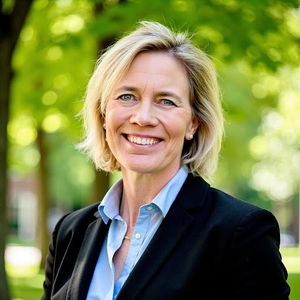
Pamela M. Franklin, Ph.D. is an environmental engineer and methane policy expert who spent 22 years at the U.S. Environmental Protection Agency’s Office of Air and Radiation working on climate change, serving most recently as Chief of the Methane Partnerships Branch. In that role, she designed and led a portfolio spanning five domestic voluntary methane programs covering the oil and gas, coal mining, agriculture, and waste sectors. She also directed the Global Methane Initiative, a 49-country public-private partnership that achieved more than 50 million metric tons of CO₂-equivalent in annual reductions at its peak. She served as Lead Author for the 2006 IPCC Guidelines for National Greenhouse Gas Inventories, contributing to the scientific work recognized by the 2007 Nobel Peace Prize. She holds a Ph.D. in Energy and Resources from UC Berkeley, where her dissertation research included combustion analysis of gasoline additives, an M.S. in Civil and Environmental Engineering from Stanford, and a B.S.E. in Chemical Engineering from Princeton. She currently serves as a judge for the Climate Curve Prize: Methane.
Project Summary
For more than three decades, EPA’s methane outreach programs provided the technical backbone of U.S. voluntary action on methane emissions across the oil & gas, coal mining, waste, and agriculture sectors, including sector-specific guidance, measurement and verification frameworks, emissions accounting tools, and platforms for public-private collaboration that engaged more than 100 corporate partners and supported action in 49 countries. Federal leadership and funding for these programs has effectively ceased. Dr. Franklin’s fellowship project addresses the gaps left by this disruption. Drawing on her engineering background and more than a decade leading these programs at EPA, she is conducting a rigorous, technically grounded assessment of which program functions, technical resources, and institutional services have been lost; which of those gaps are most consequential for near-term methane mitigation; and where states, NGOs, and private-sector actors can fill them. The project spans both domestic programs and U.S. international initiatives, including the Global Methane Initiative. The core deliverable is a policy roadmap providing practical, evidence-based guidance for the states, companies, funders, and organizations now working to maintain voluntary methane action in the absence of federal leadership. Dr. Franklin plans to collaborate with the Center for Global Sustainability at the University of Maryland.