
Please see below or check out all of our EPN and L4GG funding, resources, opportunities, and guidance updates.
Please Join Us This Wednesday, October 28, for A Debrief of Our Justice By Design Event and Our Federal Grantee Office Hour. Please Note that Our Next Webinar Is Wednesday, December 9.
– If you’re a federal grantee (or were a federal grantee), register here for L4GG’s updates on ongoing litigation, as well as new regulatory and compliance trends, this Wednesday, October 28, from 12:30-1pm eastern.
– Please register here for our next webinar on Wednesday, December 9, 1-2pm eastern, where we’ll debrief the Justice By Design event we hosted in New York last month with leaders from across the environmental justice community. This will be an opportunity to continue the conversation for those who attended and add in your thoughts for those who could not make it. You can view recordings and slides from our past webinars here.
Comptroller General Determines that EPA’s Termination of the Community Change Grant Program Violated the Impoundment Control Act
On October 7, the Comptroller General (CG), an independent congressional agency, issued a legal opinion finding that EPA violated the Impoundment Control Act (ICA) by illegally terminating the Community Change Grant (CCG) program without following the ICA’s requirements for obtaining congressional approval to rescind funding for the program. The CG found that EPA failed to comply with congressional direction in 42 U.S.C. 7438 to use Inflation Reduction Act appropriations to implement the CCG program. Although the CG’s ICA opinion does not require EPA to restart the CCG program, it does provide support for CCG recipients whose grants were improperly terminated to engage in congressional and public outreach to counter the Trump administration’s refusal to adhere to the rule of law. View the decision and read the full report here.
The ICA was enacted in 1974 to ensure that executive branch agencies obligate and expend congressional appropriations consistent with the President’s constitutional responsibility to ensure that laws are faithfully executed. The EPA case was the seventh time that the CG has determined that the current Trump administration violated the ICA through mass terminations or other interference with expenditures of federal grant funds. No other administration has come close to that number of ICA violations.
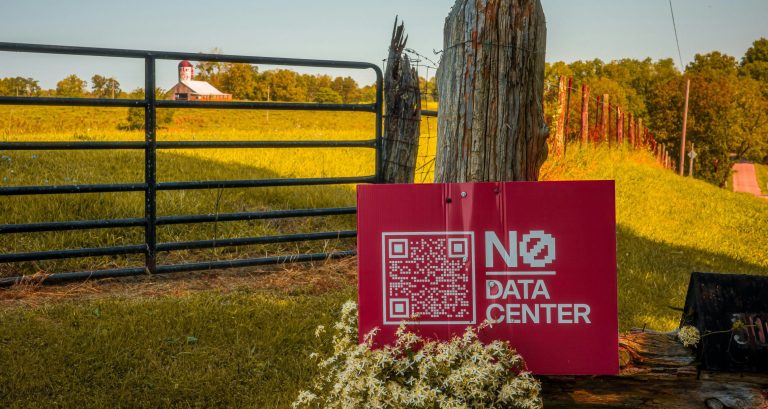
Data Center Resources and Site Fight Support
Technical and Legal Assistance
– Fill out EPN’s Technical Assistance Request Form to request 1:1 technical (including regulatory) support.
– Reach out to L4GG to request legal assistance, research, ordinance drafting, and other legal services through the Green and Equitable Communities Clinic intake form.
– EPN has developed a resource, Holding Data Centers Accountable: A Guide to Federal Environmental Permitting, to help communities and assistance providers navigate the federal permitting landscape as it relates to data center development. We’ve also created a shorter intro document for easy reference, found here.
– To help us in our own work, we created a Data Center Resource Directory to simplify searching for data center resources in one place. Resources range from introductory data center information to deep reports on diesel generators, for example. Watch a tutorial on how to use the Directory here and suggest resources to add to the Directory here. We will review suggested resources to add on a weekly basis.
Communities Take Charge: Data Center Model Policy Guide
We Build Progress, along with Climate XChange, Friends of the Earth, the Model Climate Laws Initiative, Public Citizen, Rooted Futures Lab, Run on Climate, and WE ACT for Environmental Justice released the Communities Take Charge: Data Center Model Policy Guide. The resource includes a step-by-step map of how data center projects move, a model moratorium ordinance, and model language to protect communities from existing data centers’ harm. Access the guide here.
Funding Fridays Webinar Series: Data Center Noise
On October 30 at 10am eastern, the Midwest Climate Collaborative will be hosting a webinar featuring Kasey Fowler-Finn, an expert in low-frequency sounds from industrial facilities, including data centers. The webinar will delve into how noise from the data centers is distinct from that of other facilities. Learn more and register here.
Thirst for Knowledge: Water and Data Center Basics
On November 5 at 11am eastern, Reimagine Appalachia will host a webinar about how the cooling systems used in data centers work, how much water is truly needed, the implications for water systems in the region, different approaches for data center systems and their relative water intensity, and more. Please register here.
Philanthropic and Federal Funding Opportunities
EPN and L4GG Resources to Help You Find Funding and Financing
– Check out EPN’s latest Funding Bulletin, a resource guide to funding opportunities—including philanthropic, state, and local funding and use EPN’s Technical Assistance Request Form to request 1:1 funding discovery support or other technical assistance.
– You can also access L4GG’s Sprint Hub for direct legal support for all types of green finance needs for community projects. L4GG will work with you to identify potential investors or mission-driven lenders, including Green Banks and CDFIs, to close any funding gap. In addition, L4GG’s Green Finance Team can help you navigate the complex world of alternative funding sources. Get direct pro bono assistance for your project here!
The Climate Smart Communities Initiative
The Climate Smart Communities Initiative (CSCI) has launched its 2027 grant opportunity to support community-based climate resilience projects in highly climate-vulnerable U.S. communities, with priority given to historically disinvested populations at increased risk from climate impacts. CSCI anticipates awarding 16-20 grants of $75,000 to $115,000 for 12-month projects beginning in July 2027. The application process begins with a Letter of Intent (LOI) due November 20. Selected applicants will be invited to submit full applications in February 2027, with invitations expected by the end of 2026. Learn more and submit an LOI here.
Rural Climate Partnership
The Rural Climate Partnership provides rolling grants to rural-led and rural-serving organizations advancing practical, community-driven and equitable climate solutions in rural America. Funding supports both specific projects ($20,000-$100,000) and general operating costs ($75,000-$150,000). The Partnership emphasizes long-term relationships with grantees, offering flexible support grounded in trust, transparency and collaboration. Learn more and submit and LOI here.
Brownfields Renewable Energy Pilot – Michigan
The Michigan Department of Environment, Great Lakes, and Energy is offering $10 million in grants to establish renewable energy and energy storage infrastructure on contaminated properties. These grants can be used for energy infrastructure costs, site preparation, and brownfield activities at properties with known contamination. Round 1 applications will be accepted from November 2 through December 11. A second round of funding will open in early 2027. Learn more and apply here.
Small Utility Clean Energy Planning Grant Program – Illinois
The Small Utility Clean Energy Planning Grant Program will support municipal electrician utilities and cooperative electric utilities in aligning power generation planning and procurement with Illinois’ Climate and Equitable Jobs Act (CEJA’s) goal of 100% carbon-free power by 2045. Applications are due November 13. Learn more and apply here.
Climate Smart Food Systems – Minnesota
The Minnesota Pollution Control Agency has approximately $6 million available to support organics management programs across the state that will expand participation in Minnesota’s organics recycling system and reduce the amount of wasted food and food scraps disposed of through landfilling or incineration. Grant funding will support projects focused on organics collection programs, outreach and education that improve or increase organics recycling, and/or market development for finished compost and anaerobic digestion outputs. Applications are due by 4pm CST on November 25. Learn more and apply here.
Webinars, Workshops, and Office Hours
Anthropocene Alliance: October Eco-Exchange
Join the Anthropocene Alliance’s October Eco-Exchange on Tuesday, October 27, at 1pm eastern, featuring tools and strategies for strengthening democracy through community engagement and shared decision-making, including the Healthy Democracy Ecosystem Map and a live demonstration of It’s Your America, a model for community deliberation. The session will also explore opportunities for cross-movement collaboration, building partnerships, and growing grassroots power. Register for the October Eco-Exchange here.
Webinar Series: Climate Resilience and Adaptation
Join Anthropocene Alliance and River Network for a new webinar series for community groups, tribal organizations, or nonprofits looking to protect their communities from the effects of climate change. The next session will be held on Thursday, October 29, at 3pm eastern. Find session dates, topics, and register here.
Should Your Organization Start a 501(c)(4)?
If you are wondering whether your organization could benefit from an affiliated 501(c)(4), join Climate Ready on Thursday, October 29, 2-3pm eastern. The webinar will provide the legal, tax, and operational differences between 501(c)(3) and 501(c)(4) organizations, how to maximize your existing advocacy capacity, and what to consider when structuring affiliated organizations to support lobbying and political activity. Learn more and register here.
Funding in a Changing Landscape: The Fundraising Questions You’re Asking Now
Funding is increasingly unpredictable, and climate and environmental justice organizations are being asked to do more with less. On Wednesday, November 4, 1pm eastern, join Climate Ready for an interactive session offering useful funding strategies and addressing pressing questions: Where can organizations find new funding? How can they make a stronger case to funders? And how can they deepen donor relationships with limited capacity? Please register here.
Simple Cybersecurity: The Most Effective Way to Significantly Reduce Your Cyber Risk Quickly
Join Climate Ready on Tuesday, November 10, 2:30pm eastern, for this practical webinar to learn how mission-driven organizations can reduce their biggest cyber risks, especially those targeting email and other critical accounts. Speakers will share simple, effective protections available through platforms you already use, explain how to implement them across your organization, and highlight Yubico’s Secure It Forward Initiative, which offers free security keys to the Climate Ready community. Please register here.
Post-Election Briefing: What the Midterms Mean for Your Organization
Join the the Climate Ready Project on Thursday, November 12, 2pm eastern, for a timely briefing on what the 2026 midterm election results mean for climate and clean energy advocacy. Climate Ready strategists and service providers will discuss emerging risks and opportunities and share practical guidance to help organizations prepare for the next Congress and engage with policymakers at every level. Please register here.
Fair Shake: Utilities 101
Join Fair Shake Environmental Legal Services on Thursday, November 19, from 12-1:30pm eastern, for a discussion about utilities—how they are owned and operated and how this might be affecting your billing, renewables, and data centers. Resources will be shared with everyone who registers. Learn more and register here.
Make the Most of Year-End: Raise Funds Now, Build Stability for 2027
Join the Climate Ready Project on Thursday, November 19, 3pm eastern, to learn how to make the most of year-end fundraising while setting your organization up for a stronger 2027. This session will cover practical strategies for donor outreach, compelling fundraising asks, and effective follow-up to keep supporters engaged. You’ll also explore how to align fundraising goals with cash flow and budget planning so you can finish 2026 strong and start the new year on firmer financial footing. Please register here.
Resources
New Playbook Helps States Unlock Funding for Green Banks
The State Support Center and U.S. Green Bank 50 have released the Green Bank Public Capitalization Pathways Playbook, a practical resource to help states launch or expand Green Banks without requiring new state appropriations. Green Banks help finance clean energy and community infrastructure projects that can lower energy costs for households and businesses, improve affordable housing, reduce pollution, and strengthen community resilience. The Playbook outlines ways states can leverage existing funding sources and financial tools to support these investments, with examples from states already putting these approaches to work. Access the Playbook here.